
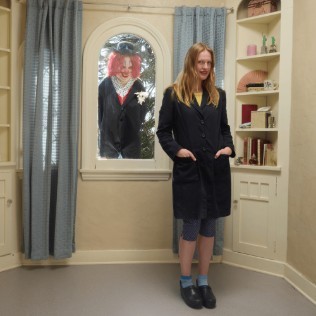
When Audrey Hobert released her debut album Who’s the Clown? this past August, she didn’t just introduce herself as a new voice in pop music; she gave teenage girls a voice. The album blends vulnerability, wit, and confession in a fresh and exaggerated way. She uses her dramatic tone to explain the messy and sometimes confusing period in between adolescence and adulthood. With songs like “Thirst Trap” where she’s wrestling with self doubt, and others like “Wet Hair” where she's mourning a breakup, she is unafraid to poke fun at her own emotional turmoils. This album beautifully captures the highs and lows of girlhood, but it also raises a question: does this speak equally to young girls of color, or mainly to the white experiences that dominate most pop narratives?
In an interview with junior Kelis Smith, she spoke about how race and social media shape the way teenage girls view themselves while growing up. She explained that while “all girls deal with pressure about looks and personality online,” girls of color often face added layers of judgment and misunderstanding. “It’s like we’re expected to be confident but not too loud. Pretty but not too different,” Smith said.
Smith compared how society treats white girls vs. girls of color, saying that, “white girls can make mistakes and people brush it off, but when it’s us, it becomes a whole thing.” When asked about relating to music by white artists, Smith mentioned that she enjoys Taylor Swift’s “Folklore”, but admitted, “there are parts I just can’t connect with.” Despite that, Smith said Hobert’s song Thirst Trap, “felt real in a way I could see myself in.” Her reflections show how Hobert’s music might be doing something rare, bridging experiences that usually feel divided by race and representation.
Next I had an Interview with senior Natalya Santiago, who described herself as white-passing and says that it sometimes makes it harder for her to connect with her own Hispanic culture. Still, she feels she can relate to many of the struggles teenage girls face, like not fitting in and feeling constant pressure from social media. “It’s hard not to compare yourself,” Santiago said, explaining how teenagers become very self-conscious and start worrying more about how they appear to others than who they really are.
Santiago mentioned that she listens to a mix of music and can “vibe with anything” so long as she enjoys it. When I played Audrey Hobert’s “Thirst Trap” for her, Santiago said she was surprised by how much she related to it. “It really reminded me of when I was younger and started caring more about how I looked than what I liked,” explained Santiago. To her, the song captured the pressure of being a teenage girl in a world that’s always watching, adding, “It just felt real. Like it got what being a teenage girl actually feels like.”
Listening to “Thirst Trap” myself, I couldn’t help but feel that Audrey Hobert perfectly captured what it’s like to grow up as a teenage girl in today’s world. The song felt like a mirror, reflecting the insecurities, comparisons, and moments of self-doubt that so many of us experience. Hobert’s words hit especially hard because they don’t just point out the pressures of being a girl, they also expose the exhaustion that comes from constantly trying to meet them. For me, it was more than just relatable, it felt incredibly validating.
In talking with Smith and Santiago, I discovered that “Thirst Trap” resonates beyond just surface level emotions. Whether you’re black, white, Hispanic, or everything in between, Hobert’s music touches something universal about being seen and judged in the world today. Both girls said that after hearing the song, they wanted to listen to the entire album, which is proof that Hobert’s message pulled them in beyond just the single song. Their reactions show that Hobert may be doing something rare in pop music today. She is creating space for all kinds of girls to feel understood. Her album reminds us that while our experiences aren’t identical, our emotions often are, and that shared vulnerability is what truly connects us.