
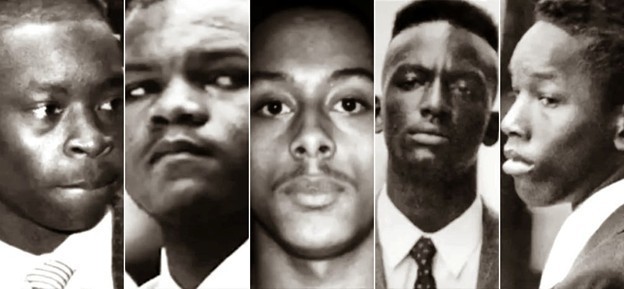
The Central Park 5 case stormed the American headlines in April 1989 as Trisha Meili, a 28-year-old investment banker, was brutally beaten and raped while jogging in Central Park. She was in a coma for nearly two weeks and had no memory of the attack. Five innocent, minority teens were quickly accused of the crime and the wheels of American injustice were quickly set in motion.
The five boys, Antron McCray, Kevin Richardson, Yusef Salaam, Raymond Santana, and Korey Wise were all charged with the same crime but faced different levels of punishment. Korey Wise, the oldest, was sent to adult jail, where he was treated harshly, often beaten, and denied food. Meanwhile Antron McCray was charged but received lighter treatment because of his age. The case revealed how differently the justice system handled young Black and Latino teens compared to white offenders.
Donald Trump, then a New York real estate mogul, seemed convinced the teens were guilty and even took out full-page ads calling for the death penalty. The city’s atmosphere was tense, and many people were more focused on punishment than truth. As one New York resident said, “I want to hate these murderers and I always will. I am not looking to psychoanalyze or understand them, I am looking to punish them.” This mindset fed into an era of high crime rates and racial profiling by city police.
The documentary (stream it on Netflix) directed by the talented Ken Burns in 2012 doesn’t just tell the story of what happened in 1989, it exposes what was wrong with America’s justice system at the time. It reveals how systemic racism, media bias, and fear of crime shaped public opinion and destroyed innocent lives. While the film briefly touches on Korey Wise’s individual suffering, its larger message is about how easily truth can be buried when society prioritizes punishment over understanding.
The Central Park 5 serves as both a historical record and a warning. It reminds viewers that justice can fail when prejudice replaces evidence and fear outweighs fairness. Decades later, the case still stands as a powerful example of how deeply race and power can distort the pursuit of truth and how the cost of that failure is measured in human lives. Forcing young men into false confessions through bullying police tactics reflected the deep racial divide and fear that existed in New York into the 90s during Governor Giuliani’s drive to clean up crime in one of America’s biggest cities.
As a young minority man, the relevance of this documentary resonated deeply with this reporter. The fear of being wrongfully accused or caught up in racial profiling is a reality that many face, and the film serves as a sobering reminder of how quickly justice can become a casualty of prejudice. In our current era where racial tensions and ICE immigration crackdowns are prevalent, the lessons from the Central Park 5 case remain crucial.
Understanding these narratives not only informs our historical context but also empowers us to advocate for a more equitable future. This film is not just a reflection on past injustices; it’s a call to action for all of us to remain vigilant in the fight against systemic racism and to ensure that truth prevails over fear and bias.