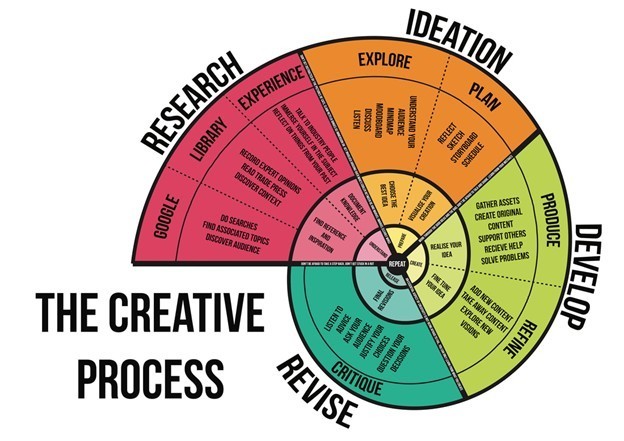
Many art instructors at Co-op emphasize that process and performance are equally vital objectives for young artists. However, while the performance component of art often captures the most attention, the process has been more instrumental to my personal growth. I’ve found that true learning occurs within the "invisible labor", the discarded drafts, the grueling practice sessions, and the moments of uncertainty that eventually forge proficiency and self-assurance. While a final performance is satisfying, it often feels less like the ultimate goal and more like a byproduct of the struggle that preceded it.
Throughout my time at Co-op, I have personally grappled with the challenges that often haunt young artists such as paralyzing stage fright and the persistent shadow of writer’s block. There were moments when the pressure to perform made the creative process feel like a burden rather than a joy. However, as I transitioned from staring at a blank page to experimenting with diverse writing styles from narrative prose to analytical essays, my perspective began to shift. Each new style taught me that a creative block isn't a permanent wall, but a temporary hurdle that can be dismantled through practice and persistence. Over the years, this journey has transformed my writing from a source of anxiety into a powerful tool for self-expression, proving that growth is found in the courage to keep writing – even when the words don't come easily.
At Co-op, this process is visible in the iterative nature of our work: the multiple drafts of a poem, the hours of rehearsal without an audience, and the critique sessions that push us toward refinement. The performance, whether a reading, an exhibition, or a publication, is merely the final presentation.
Discussions with other student artists at Co-op strengthened this conviction. A visual artist characterized the process as “all that occurs when no one is observing.” They expanded: “for me, the process is everything that happens when no one is watching. The sketches, the paint, the frustration.”
A Co-op musician highlighted that "the performance is adrenaline and nerves, but the process is discipline and practicing when you don't feel inspired.”
A Co-op arts teacher shared this sentiment, highlighting that performance is not the objective but rather a reflection of the hidden effort that preceded it by saying, “a strong performance is evidence of a strong process.”
This tension between internal growth and external display extends into our social and academic lives. Socially, "performance" can feel constant as we curate versions of ourselves to meet external expectations – even as the messy, private process of self-discovery happens behind the scenes. Academically, the divide is even sharper. "Process" represents the deep thinking, research, and questioning that lead to genuine understanding, yet the system often prioritizes the "performance" of grades and deadlines. As Prince Ea highlighted in his critique of modern schooling, education frequently values the final score over the development of the student. Yet it is the development, not the grade, that truly prepares us for the future. [View Prince Ea video on youtube - https://www.youtube.com/watch?v=dqTTojTija8]